

How to Store Unfinished Crochet Projects Without Losing Your Place
You know the feeling.
You’re halfway through a blanket, granny square, sweater, or amigurumi project when life interrupts. You put your crochet down “just for now,” and when you return a few days later, the hook is missing, the yarn is tangled, and you can’t quite remember where you stopped.
For many crocheters, starting a project is easy.
Keeping a work in progress organized until the next crochet session is the harder part.
The simplest way to store an unfinished crochet project is to keep the project, working yarn, crochet hook, pattern, and essential tools together in one dedicated place. Before putting it away, secure your last stitch and make a quick note of where you stopped.
Here are practical ways to keep your crochet WIPs organized, protected, and ready whenever inspiration returns.
What Is a Crochet WIP?
If you've spent time in crochet communities, you've probably seen the abbreviation WIP.
It simply means:
Work in Progress.
A crochet WIP could be almost anything you haven't finished yet:
- A blanket
- Granny squares
- A sweater
- Amigurumi
- A scarf
- A crochet bag
- A gift you're making for someone
And if you're like many makers, you probably have more than one.
There's nothing wrong with having several projects going at once. The challenge is keeping each one organized so that returning to it feels easy rather than frustrating.
1. Secure Your Last Stitch Before Storing the Project
Before putting your crochet away, protect the stitch currently on your hook.
If the hook slips out while your project is stored, your work can begin to unravel.
One easy method is to pull the working loop slightly larger before removing the hook.
You can also place a locking stitch marker through the active loop.
This gives you an extra layer of security, especially if your project will be transported or stored for several days.
Quick habit:
Stop → Secure the loop → Store the project
It only takes a few seconds and can save you from repairing several rows later.
2. Keep the Correct Crochet Hook With the Project
Have you ever returned to a project and thought:
"Was I using a 4.5 mm or 5 mm hook?"
It happens surprisingly often.
Even if two hooks look similar, changing sizes halfway through a project can affect your stitch tension and finished dimensions.
Whenever possible, keep the hook you're using with the unfinished project.
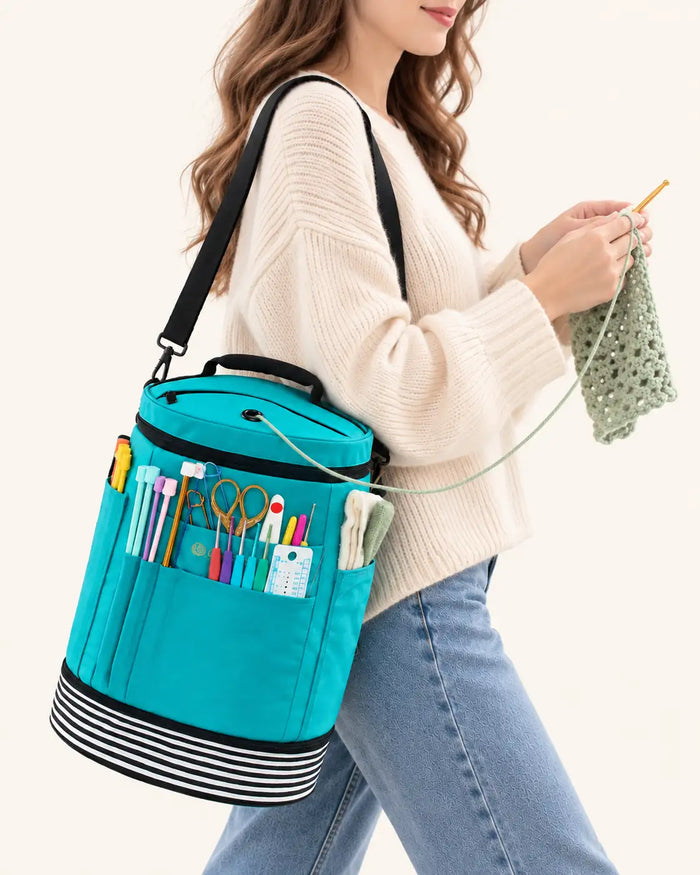
A dedicated tool pocket makes this particularly convenient.
If you need the hook for another project, write down the hook size before removing it.
3. Store the Working Yarn With Your WIP
Don't separate your unfinished project from the yarn you're using to make it.
If you put the yarn back into your main stash, you may later have difficulty identifying:
- The exact color
- The yarn weight
- The dye lot
- Which skein belongs to which project
Instead, keep the active skeins together with the project.
For multi-color crochet, this becomes even more important.
Try keeping each color separated so loose strands don't become tangled while the project is stored.
4. Make a Quick Note of Where You Stopped
You don't need a detailed crochet journal every time you put your hook down.
A simple note can be enough.
Write something like:
Row 27 complete – start Row 28 next
or:
Finished 3 pattern repeats
You can use:
- A notebook
- Pattern printout
- Sticky note
- Row counter
- Phone note
For more complicated patterns, you may also want to note your current stitch count.
Your future self will appreciate it.
5. Keep the Pattern With the Project
Patterns have a habit of disappearing exactly when you need them.
If you're using a printed pattern, keep it inside the same project organizer.
If you're following a digital pattern, consider writing down the pattern name or saving it in a dedicated folder on your phone or tablet.
For printed instructions, a transparent pocket can be particularly useful because it keeps the pattern visible while protecting it from yarn, tools, and everyday wear.
The goal is simple:
When you pick up the project, everything needed to continue should already be there.
6. Separate Small Crochet Tools From Your Yarn
Your project may need more than a hook.
Depending on what you're making, you might also use:
- Stitch markers
- Yarn needles
- Scissors
- Measuring tape
- Row counters
- Pins
Dropping all of these into the same compartment as your yarn can create unnecessary clutter.
Small tools can disappear underneath skeins, and loose yarn may catch around scissors or hooks.
Instead, keep accessories in dedicated pockets or a small pouch.
This makes it much easier to resume your project without searching for supplies.
7. Give Each Active Project Its Own Storage Space
If you have multiple WIPs, avoid mixing them together.
Imagine storing yarn for a sweater, granny-square blanket, and amigurumi project in the same tote.
Before long, you're asking:
"Which hook belongs to which project?"
A better system is:
One Project → One Set of Yarn → One Hook → One Pattern
For smaller projects, individual project bags work especially well.
For larger projects, use a more spacious yarn organizer that can hold both your yarn and the growing unfinished piece.
This also makes it easier to choose what you want to work on.
Grab one project and go.
8. Protect Your WIP From Dust, Pets, and Everyday Mess
Crochet projects often take weeks—or even months—to complete.
During that time, leaving them uncovered on a chair or table can expose them to:
- Dust
- Pet hair
- Food crumbs
- Spilled drinks
- General household mess
A covered storage solution provides better protection between crafting sessions.
This matters even more for projects made with light-colored yarn or pieces you're making as gifts.
You invested hours into your stitches.
Your unfinished work deserves a safe place while it waits.
9. Don't Overpack Your Project Bag
A project bag should organize your work, not compress it.
As a blanket, sweater, or other large crochet piece grows, it takes up increasingly more room.
If the bag becomes too full, yarn may stop feeding smoothly and your project can become unnecessarily compressed.
This is where expandable storage can be useful.
Rather than moving everything into a completely different container halfway through the project, additional capacity gives the WIP room to grow.
Choose storage based not only on the amount of yarn you start with—but also on the size of the project you expect to finish.
10. Create a Simple “Ready to Crochet” System
The best project organization system is the one that makes starting again effortless.
Before ending each crochet session, spend one minute resetting your project.
Your 1-Minute WIP Checklist
✓ Secure the active stitch
✓ Put the correct hook away
✓ Separate working yarn
✓ Record your current row
✓ Return small tools to their pockets
✓ Place the unfinished project inside
✓ Keep the pattern with everything else
Now the next time you have twenty free minutes, you don't need ten of them just to figure out where everything is.
You can simply open your project and continue.
Crochet Project Bag vs Regular Tote for WIP Storage
Can you store an unfinished crochet project in a regular tote?
Absolutely.
But there's an important difference between carrying something and organizing a working project.
| Feature | Crochet Project Bag | Regular Tote |
|---|---|---|
| Keeps yarn + project together | ✓ | ✓ |
| Dedicated hook storage | ✓ | Usually no |
| Small accessory organization | ✓ | Limited |
| Pattern storage | ✓ | Limited |
| Helps separate yarn | ✓ | Usually no |
| Easy to resume project | ✓ | Depends on organization |
| Designed around crafting | ✓ | No |
A regular tote can work perfectly well for a simple project.
But as the number of yarn colors, tools, and WIPs grows, dedicated organization becomes much more useful.
How ZINGCRATER Helps Keep WIPs Ready for Your Next Stitch
At ZINGCRATER, we think crochet storage should do more than hide supplies when you're finished crafting.
It should make it easier to start again.
That's why our crochet and yarn organizers are designed around the different parts of a real project.
Depending on the style, storage can include dedicated areas for:
- Yarn
- Crochet hooks
- Knitting needles
- Scissors
- Patterns
- Small accessories
- Unfinished projects
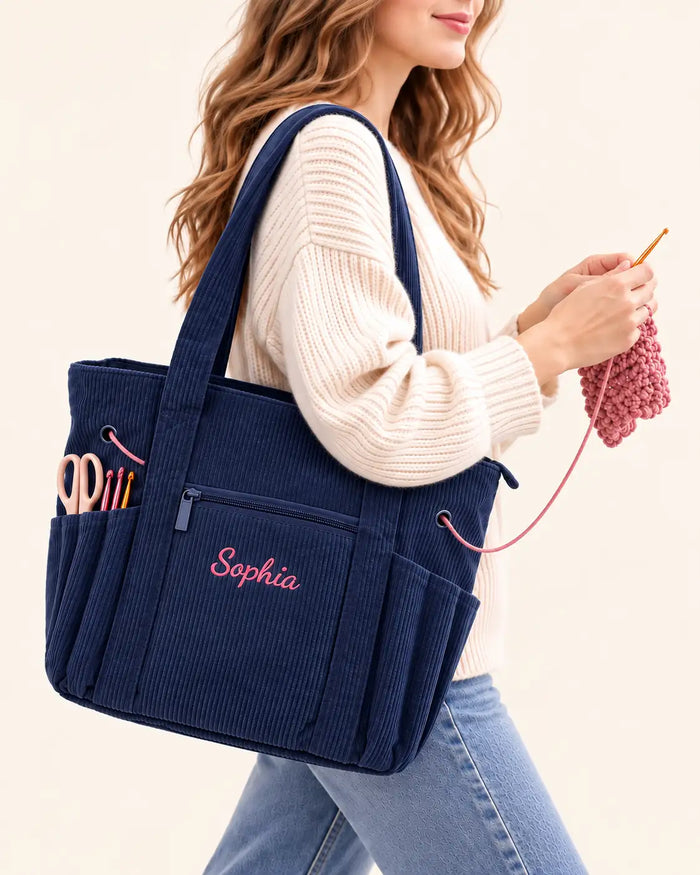
For everyday WIPs, a crochet project bag keeps the supplies for one project together and makes it easy to move your work from room to room.
For larger projects and bigger yarn collections, a yarn storage bag provides more room for skeins and growing handmade pieces.
The idea is simple:
Open your bag. Find your place. Keep creating.
Frequently Asked Questions About Storing Crochet Projects
What is the best way to store an unfinished crochet project?
Keep the unfinished piece, working yarn, correct crochet hook, pattern, and essential accessories together. Secure the active stitch before storing the project and note where you stopped.
How do I stop crochet from unraveling when I put it away?
Pull the active loop slightly larger or secure it with a locking stitch marker before removing the hook. This helps prevent the working loop from accidentally pulling through.
Should I leave my crochet hook in the project?
You can, but the hook may slip out during storage or transportation. Securing the active loop and placing the hook in a nearby tool pocket can be safer while still keeping the correct hook with the project.
How do I organize multiple crochet WIPs?
Give each active project its own storage space and keep its matching yarn, hook, pattern, and accessories together. Labeling projects can also help if you have several WIPs at once.
Can I store crochet projects in plastic bags?
Plastic bags can temporarily keep supplies together, but they offer little organization for tools and working yarn. For frequently used projects, a reusable project organizer is generally more convenient.
How do I store a large unfinished crochet blanket?
Choose a clean, covered storage space with enough room for the blanket and its remaining yarn. Avoid compressing the project too tightly. As the blanket grows, larger or expandable storage may be more practical.
Final Thoughts
Having unfinished crochet projects isn't a sign that you're disorganized.
It's part of being creative.
Sometimes a new idea is too exciting to wait. Sometimes life gets busy. And sometimes a project simply needs to rest for a while.
What matters is making it easy to come back.
Before putting your crochet away:
Secure your stitch.
Keep the yarn and hook together.
Record where you stopped.
Give the project its own space.
Then, whether you return tomorrow or three weeks from now, your project will be waiting exactly where you left it.
At ZINGCRATER, we design storage solutions to help makers keep every work in progress organized, protected, and ready for the next stitch.
Less searching. More making.
0 comments