

How to Store Different Types of Yarn: Cotton, Wool, Acrylic & More
If you crochet or knit regularly, your yarn collection probably includes more than one fiber type.
Cotton for summer projects. Wool for warm accessories. Acrylic for everyday makes. Maybe chenille for plush projects or a few leftover skeins you can’t quite bring yourself to throw away.
The problem is that different yarns do not always benefit from exactly the same storage method.
The best way to store yarn is to keep it clean, dry, protected from unnecessary friction, and organized according to how often you use it. Long-term stash yarn may need closed storage, while yarn for active crochet and knitting projects should stay easy to reach and simple to work from.
Here’s how to store different types of yarn without turning your craft space into a pile of mystery skeins.
Does Yarn Type Matter When Choosing Storage?
Yes.
Fiber type, texture, and how often you use the yarn can all influence the best storage method.
For example, smooth acrylic yarn is fairly easy to organize, while delicate wool may need more protection from pests and moisture. Chenille and plush yarn can become compressed if packed too tightly, and partial skeins are much easier to manage when they are labeled.
A practical yarn storage system usually has two parts:
Long-term yarn stash storage for yarn you are not currently using.
Active project storage for yarn, tools, and unfinished work you want to access regularly.
Keeping these two categories separate makes organization much easier.
1. How to Store Cotton Yarn
Cotton yarn is durable and commonly used for dishcloths, summer tops, bags, blankets, and home décor.
Because cotton can absorb moisture, it is important to store it somewhere dry.
For long-term storage:
-
Keep cotton yarn away from damp areas
-
Store it in a clean bin, drawer, cabinet, or covered basket
-
Avoid direct sunlight, which may fade strong colors
-
Keep different weights or projects separated
For cotton yarn you are actively using, a yarn organizer or project bag can be more convenient because you can keep the matching hook, pattern, and work in progress together.
Best for active cotton projects
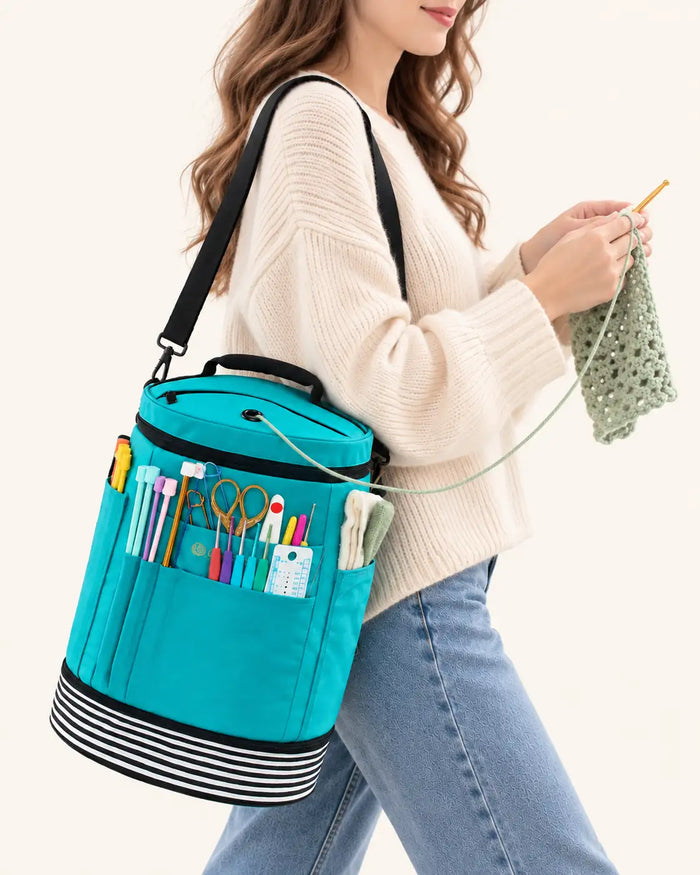
A breathable yarn storage bag with separate compartments works especially well when you are using several colors for granny squares, bags, or blankets.
2. How to Store Wool Yarn
Wool needs a little more attention than many synthetic fibers.
The main concerns are:
-
Moisture
-
Moths and other fabric pests
-
Dust
-
Long-term compression
Before storing wool for a long period, make sure it is completely dry and clean.
Closed storage is usually more suitable for reserve wool yarn because it provides better protection than an open basket.
You can organize wool by:
-
Weight
-
Color
-
Fiber blend
-
Planned project
Avoid storing wool in damp basements, garages, or other areas with large temperature and humidity changes.
For an active wool project, keep only the yarn you are currently using in your crochet project bag or knitting project bag, while the rest of your stash remains protected.
This gives you easy access without exposing your entire wool collection every time you craft.
3. How to Store Acrylic Yarn
Acrylic is one of the easiest yarn types to store.
It is durable, widely available, and commonly used for:
-
Blankets
-
Amigurumi
-
Scarves
-
Beginner projects
-
Everyday crochet and knitting
For long-term storage, acrylic yarn works well in bins, drawers, cubes, or cabinets.
If you have a large acrylic stash, sorting it by color can make planning future projects much easier.
For active projects, however, placing several skeins loose in a large bin is not always convenient.
A yarn storage organizer can keep active skeins separated while giving hooks, scissors, stitch markers, and patterns their own places.
That distinction is useful:
Bins are excellent for storing acrylic yarn.
Yarn bags are often better for actually working with it.
4. How to Store Chenille and Plush Yarn
Chenille, velvet, and plush yarns are soft and bulky, which makes them popular for amigurumi, baby items, blankets, and cozy accessories.
They also take up a lot of space.
The biggest mistake is packing them too tightly.
Heavy compression can flatten soft yarn and make your storage area unnecessarily difficult to use.
Instead:
-
Give bulky skeins enough room
-
Avoid placing heavy items on top of them
-
Keep working skeins separate from hooks and sharp tools
-
Use larger storage for active plush projects
If you frequently work with bulky yarn, a large yarn storage bag can be useful because it gives the skeins space while keeping the current project portable.
This is especially helpful for larger amigurumi or blanket projects that quickly outgrow smaller totes.
5. How to Store Leftover Yarn and Partial Skeins
Leftover yarn may be one of the hardest parts of a yarn collection to organize.
A full skein still has a label.
A half-used ball often does not.
A few months later, you may remember the color but forget:
-
The brand
-
Fiber content
-
Yarn weight
-
Dye lot
-
Hook or needle recommendation
Whenever possible, keep the original label with the leftover yarn.
You can also add a simple tag containing:
Brand:
Color:
Fiber:
Weight:
Remaining Amount:
Project Used For:
Then sort partial skeins by size or color.
Small leftovers can be especially useful for:
-
Granny squares
-
Amigurumi details
-
Borders
-
Tassels
-
Color accents
-
Scrap-yarn projects
A small pouch or compartment inside a larger yarn organizer can help prevent leftover balls from getting lost among full skeins.
6. How to Store Hand-Dyed or Specialty Yarn
Specialty yarn often costs more and may be purchased for a specific future project.
That makes careful storage worthwhile.
Keep hand-dyed yarn:
-
Away from prolonged direct sunlight
-
Clean and dry
-
Protected from dust
-
With its original label
If several skeins belong to the same dye lot or planned project, store them together.
This prevents you from accidentally using one skein elsewhere before you are ready to start the project.
For an active specialty-yarn project, a dedicated project bag helps keep the yarn and unfinished piece separate from the rest of your stash.
7. Should Yarn Be Stored in Plastic or Fabric?
Both can be useful.
The better choice depends on the purpose.
Plastic or Closed Containers
Best for:
-
Long-term stash storage
-
Large yarn collections
-
Yarn stored in closets
-
Reserve supplies you use infrequently
Advantages:
-
Protects against dust
-
Easy to stack
-
Easy to label
-
Good use of shelf space
Fabric Yarn Storage Bags
Best for:
-
Active projects
-
Yarn you use regularly
-
Crochet or knitting groups
-
Moving projects between rooms
-
Travel
Advantages:
-
Easier to carry
-
Yarn and tools stay together
-
Dedicated pockets improve organization
-
Some bags allow yarn to feed directly from storage
The important point is that long-term storage and active project storage solve different problems.
You do not need to choose only one.
8. Long-Term Yarn Stash vs Active Project Storage
This is one of the easiest ways to improve your yarn organization.
Divide your collection into two categories.
Yarn Stash
This includes yarn that does not currently belong to an active project.
Store it by:
-
Fiber
-
Color
-
Weight
-
Future project
Bins, cabinets, shelves, and drawers all work well.
Active Project Yarn
This is the yarn you are currently crocheting or knitting with.
Keep it with:
-
The project
-
Correct hook or needles
-
Pattern
-
Stitch markers
-
Scissors
-
Other necessary accessories
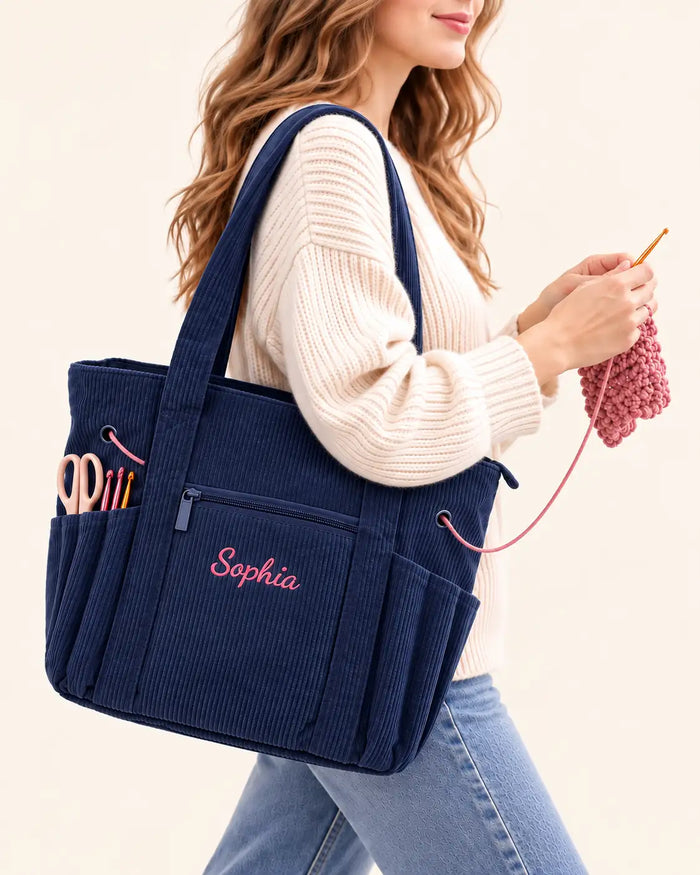
A crochet project bag, knitting project bag, or yarn storage bag is much more useful here because everything stays ready for your next crafting session.
Instead of opening a large yarn stash every time you want to crochet, you only reach for the project you are actually working on.
9. How Much Yarn Should You Keep in One Storage Bag?
There is no universal number.
It depends on:
-
Yarn thickness
-
Skein size
-
Project size
-
Bag capacity
-
Amount of space needed for the unfinished project
The best rule is simple:
Do not pack active yarn so tightly that it cannot move or feed comfortably.
If your yarn organizer is completely full before your project has even started growing, you may need a larger bag.
For blankets, sweaters, and multi-skein projects, expandable or larger-capacity storage can be particularly useful.
10. Label Your Yarn Before You Forget What It Is
Good yarn storage is not only about keeping things tidy.
It is also about keeping useful information.
When separating yarn from its original packaging, preserve important details such as:
-
Fiber content
-
Yarn weight
-
Brand
-
Color name
-
Dye lot
-
Care instructions
This becomes especially important when you want to buy additional yarn later.
A neatly organized skein is much less useful if you no longer know what it is.
A Simple Yarn Storage System That Works
You do not need an elaborate craft room.
Try this three-part system:
Reserve Yarn
Store unused yarn in labeled bins, drawers, shelves, or cabinets.
Active Yarn
Keep the yarn for your current projects in a yarn storage bag or project organizer.
Leftovers
Keep partial skeins labeled and grouped separately.
This makes it easier to see what you own, find yarn for new projects, and avoid mixing active projects with your larger stash.
How ZINGCRATER Fits Into an Organized Yarn System
At ZINGCRATER, we design storage for the part of yarn organization that happens between “buying the yarn” and “finishing the project.”
Active crafting involves more than storing skeins.
You also need room for:
-
Crochet hooks
-
Knitting needles
-
Patterns
-
Scissors
-
Stitch markers
-
Works in progress
That is why a dedicated yarn storage bag can be useful alongside your long-term storage system.
Your reserve yarn can stay neatly stored in your craft room, while the yarn you are actively using stays organized with the project it belongs to.
Depending on your project, ZINGCRATER organizers can help you create a portable workspace for crochet and knitting without having to unpack your entire yarn stash.
Store the stash. Organize the project. Enjoy the making.
Frequently Asked Questions About Yarn Storage
What is the best way to store yarn?
Keep yarn clean, dry, protected from excessive sunlight, and organized by fiber, color, weight, or project. Use closed storage for long-term stash yarn and portable yarn organizers for active projects.
Should yarn be stored in airtight containers?
Not every yarn collection requires airtight storage. The priority is keeping yarn dry, clean, and protected. Wool and other natural fibers may benefit from more protective long-term storage, especially in areas where pests are a concern.
Does yarn need to breathe?
The ideal storage depends on fiber type and environment. Avoid storing any yarn while damp, and do not compress delicate or bulky fibers unnecessarily.
How do I store yarn without a craft room?
Use labeled bins or drawers for reserve yarn and keep active projects in portable yarn storage bags. This allows a closet or shelf to hold your stash while your current project stays easy to access.
How should I store leftover yarn?
Keep partial skeins with their labels whenever possible. If the original label is gone, add a tag with the fiber, weight, color, and brand before storing the yarn with similar leftovers.
Can I store yarn in a yarn storage bag long term?
A yarn storage bag can hold yarn between projects, but its greatest advantage is active-project organization and portability. For a very large reserve stash, bins, cabinets, or other dedicated long-term storage may be more efficient.
How do I keep wool yarn safe in storage?
Store clean, completely dry wool in a protected environment away from moisture and direct sunlight. Closed containers can also reduce exposure to dust and fabric pests.
Final Thoughts
There is no single perfect storage method for every skein in your collection.
Cotton, wool, acrylic, chenille, specialty yarn, and leftovers all have slightly different needs.
But a good yarn organization system follows the same basic principles:
Keep yarn clean and dry.
Protect fibers that need extra care.
Label what you may forget.
Separate your stash from your active projects.
And keep the yarn you are actually using somewhere easy to reach.
At ZINGCRATER, we believe storage should help you create—not make your supplies harder to use.
Give your stash a home, give every project its own space, and you'll spend less time searching through yarn and more time turning it into something beautiful.
Designed for Makers. Made for Everyday Life.
0 comments