

How to Start Crochet: Essential Tools Every Beginner Needs
Starting crochet can feel surprisingly simple—and surprisingly confusing at the same time.
You see beautiful blankets, granny squares, scarves, and handmade bags online and think, “I'd love to make that.” Then you start shopping and suddenly you're looking at dozens of hook sizes, different yarn weights, stitch markers, needles, scissors, and accessories you aren't even sure you need.
The good news is that you don't need a huge collection of supplies to start crocheting.
With a few essential tools and a simple organization system, you can begin your first project without feeling overwhelmed.
This beginner-friendly guide explains what you actually need to start crochet, what you can skip for now, and how to keep your growing collection organized from your very first stitch.
What Do You Need to Start Crocheting?
For your first crochet project, you really only need a few basics:
- Crochet hook
- Yarn
- Scissors
- Yarn needle
- Stitch markers
- Measuring tape
- A simple beginner pattern
- A place to keep everything organized
You can always add more tools as your skills grow.
The goal at the beginning isn't to own everything—it's to have the right essentials and actually start making.
1. Crochet Hooks: Your Most Important Tool
Your crochet hook is the tool you'll use for every stitch, so choosing the right one matters.
Crochet hooks come in many sizes, usually measured in millimeters. The correct hook size depends on the yarn you're using and the pattern you're following.
For beginners, medium-sized hooks are generally easier to control than very small or very large ones.
What should beginners look for?
Choose a hook that:
- Feels comfortable in your hand
- Has a smooth surface
- Doesn't snag the yarn
- Matches your yarn weight
You don't necessarily need a complete hook set immediately.
Starting with one or two sizes for your first projects is perfectly fine.
2. Choose Beginner-Friendly Yarn
Walk into a craft store and the yarn aisle can be both exciting and intimidating.
There are different fibers, thicknesses, textures, and colors everywhere.
For your first projects, simplicity helps.
A smooth, medium-weight yarn is usually easier to work with because you can clearly see individual stitches.
Beginner tip: avoid very fuzzy yarn at first
Fluffy or highly textured yarn can make it difficult to see where your hook should go.
Once you're comfortable identifying stitches, experimenting with different yarn textures becomes much easier—and much more fun.
And while dark yarn looks beautiful, lighter colors can make individual stitches easier to see while you're learning.
3. A Good Pair of Scissors
You don't need special crochet scissors to get started.
A small, sharp pair of craft scissors is enough for cutting yarn neatly.
However, keeping one pair specifically with your crochet supplies is useful.
Otherwise, you may discover one of the universal truths of crafting:
The scissors you need are never where you thought you left them.
This is also why tool pockets become surprisingly useful once your supply collection begins growing.
4. Yarn Needles for Finishing Your Projects
A yarn needle—sometimes called a tapestry needle—is used to weave loose yarn ends into your finished project.
It may not seem important when you're making your first chain, but you'll definitely need one when the project is finished.
Look for:
- A large eye for threading yarn
- A blunt tip
- A comfortable size
Plastic and metal versions both work well.
They're inexpensive, small, and very easy to lose, so keeping them in a dedicated accessory pocket or small container is a good habit.
5. Stitch Markers Make Learning Easier
Stitch markers are small tools that mark important places in your work.
They can help you identify:
- The beginning of a round
- Specific stitches
- Pattern repeats
- Increase or decrease points
They're particularly helpful when learning crochet in the round.
Could you crochet without them?
Absolutely.
Will they make some beginner projects much easier?
Also absolutely.
6. Measuring Tape
A flexible measuring tape becomes useful as soon as you start making projects where size matters.
Think:
- Hats
- Sweaters
- Scarves
- Blankets
- Bags
It allows you to check your project's dimensions as you work rather than discovering at the end that something is much larger—or smaller—than expected.
Keep one with your main crochet supplies so it's always available.
7. Start With a Simple Crochet Pattern
Your first project doesn't need to be ambitious.
In fact, completing something simple can be much more motivating than struggling through a complicated project for weeks.
Beginner-friendly projects might include:
- Granny squares
- Dishcloths
- Simple scarves
- Coasters
- Basic headbands
- Small blankets
Choose a pattern that uses a limited number of stitches and clearly explains the materials required.
Once you become comfortable with basic stitches, you can gradually move into more complex patterns.
8. Don't Forget Project Organization
This is one beginner essential that often gets overlooked.
At first, you may have:
one hook + one skein + one project.
Everything fits neatly on the table.
Then you buy another yarn color.
And another hook.
And stitch markers.
And scissors.
And you start a second project before finishing the first.
Suddenly your crochet supplies are spread across drawers, baskets, tables, and random tote bags.
Creating a simple organization system early prevents that problem.
Why a Crochet Project Bag Helps Beginners
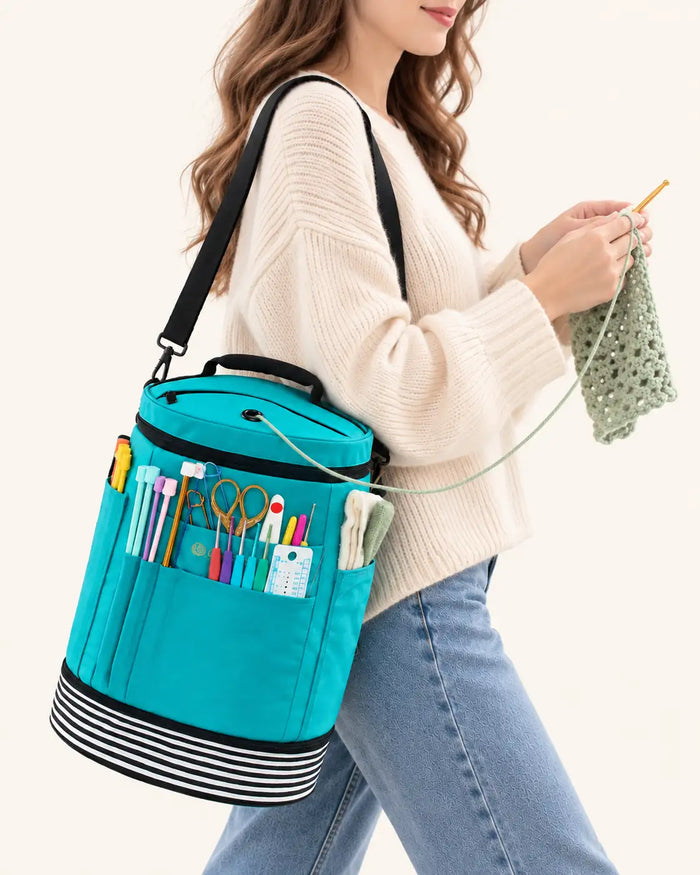
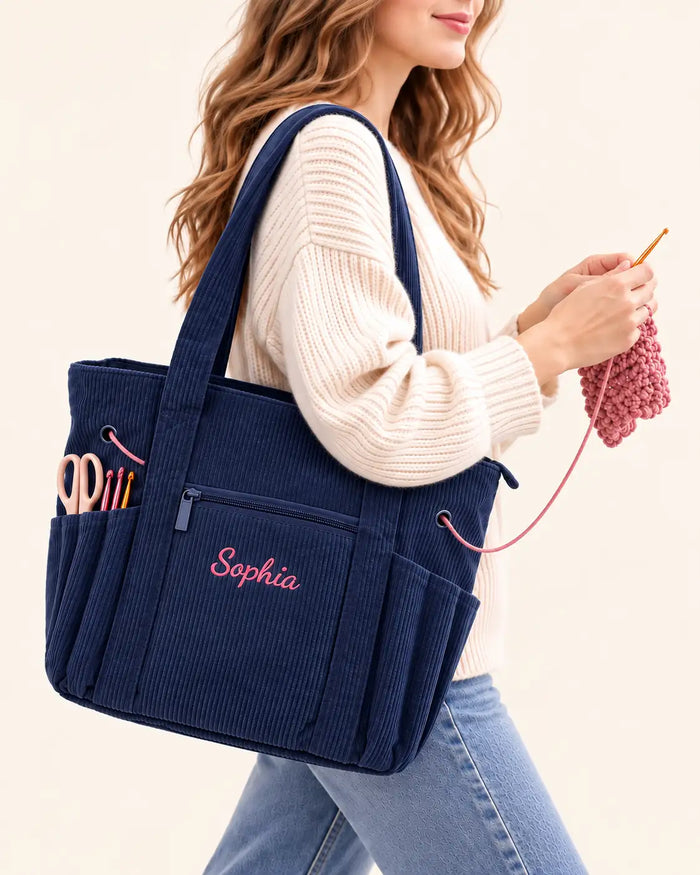
A crochet project bag gives your current project a dedicated home.
Instead of putting everything into a regular tote, you can keep related supplies together:
Project → Yarn → Hook → Pattern → Accessories
When you want to crochet, you don't need to collect everything again.
You simply pick up your project bag.
This is particularly useful if you like crocheting:
- On the sofa
- At a friend's house
- At crochet classes
- While traveling
- Outside the home
For beginners, organization also makes learning less frustrating because the tools you need are always nearby.
When Do You Need a Yarn Storage Bag?
You probably don't need a large yarn organizer on your first day of crochet.
But give it some time.
Yarn has a remarkable ability to multiply.
Once you're working on larger projects—or keeping several yarn colors—you may want a dedicated yarn storage bag.
Unlike a basic container, yarn organizers designed for crochet and knitting can provide dedicated areas for yarn, tools, and unfinished work.
Some designs also include yarn-feeding openings so you can work with yarn while keeping the skein inside the bag.
That becomes especially convenient for multi-color projects.
Beginner Crochet Supplies: What You Need vs What Can Wait
Here's a simple way to prioritize your first purchases:
| Crochet Supply | Beginner Priority | Why |
|---|---|---|
| Crochet hook | Essential | Needed to make stitches |
| Yarn | Essential | Your main material |
| Scissors | Essential | Cutting yarn |
| Yarn needle | Essential | Finishing projects |
| Stitch markers | Recommended | Makes patterns easier |
| Measuring tape | Recommended | Helps check project size |
| Crochet project bag | Recommended | Keeps supplies together |
| Large yarn organizer | Later | Useful as your collection grows |
| Blocking tools | Later | Helpful for finished projects |
| Complete hook collection | Later | Add sizes as needed |
You don't need to buy an entire craft room before making your first stitch.
Start small and let your collection grow with your skills.
How Should Beginners Organize Crochet Supplies?
A complicated organization system isn't necessary.
Try dividing your supplies into three simple categories.
1. Everyday Tools
Keep your most-used hooks, scissors, stitch markers, yarn needles, and measuring tape together.
2. Current Project
Store the yarn, pattern, hook, and unfinished piece for your current project in one crochet project bag.
3. Extra Yarn
Keep unused yarn separately until you need it.
As your collection grows, a larger yarn storage organizer can help you sort yarn by project, color, fiber, or weight.
This simple system scales naturally as you become more experienced.
ZINGCRATER: Organization Designed for Makers
At ZINGCRATER, we know that crafting becomes more enjoyable when your supplies are ready when inspiration arrives.
That's why our storage solutions are designed around real creative projects—not simply around putting things away.
For crochet and knitting makers, ZINGCRATER offers storage options designed to help organize:
- Yarn skeins and cakes
- Crochet hooks
- Knitting needles
- Small accessories
- Patterns
- Unfinished projects
A Crochet Project Bag can keep your current project portable and organized, while a larger Yarn Storage Bag gives growing yarn collections and larger projects more room.
Whether you're learning your first chain stitch or working on your twentieth handmade blanket, good organization gives your creativity room to grow.
Frequently Asked Questions About Starting Crochet
Is crochet easy for beginners?
Yes. Crochet can be beginner-friendly because you can start with a small number of basic stitches and simple projects. Learning how to hold the hook and control yarn tension usually takes some practice.
What should a beginner buy for crochet?
Start with yarn, a matching crochet hook, scissors, a yarn needle, and a simple pattern. Stitch markers and measuring tape are also useful additions.
How many crochet hooks does a beginner need?
You don't need a complete collection immediately. Start with the hook size recommended for your first yarn and pattern, then add additional sizes as you try new projects.
What is the easiest crochet project for a beginner?
Simple projects using basic stitches are usually best. Granny squares, dishcloths, scarves, coasters, and simple headbands are common beginner choices.
How should I store an unfinished crochet project?
Keep the unfinished piece together with its yarn, hook, pattern, and essential accessories. A dedicated crochet project bag makes it easier to prevent supplies from becoming separated.
Do beginners need a crochet project bag?
It isn't required to learn crochet, but it can make organization easier—especially once you have several tools, yarn colors, or more than one project.
Final Thoughts
Learning crochet isn't about buying every tool you see.
It's about starting with a few essentials, practicing your stitches, and enjoying the process of turning yarn into something you made yourself.
Start with a hook and beginner-friendly yarn.
Add the small tools that make crafting easier.
And as your collection grows, create an organization system that keeps your projects ready rather than buried in a drawer.
Your first crochet project might not be perfect.
That's part of what makes it yours.
At ZINGCRATER, we create practical storage solutions that grow alongside your creative journey—from your first skein of yarn to a collection full of projects waiting to be made.
Designed for Makers. Made for Everyday Life.
0 comments